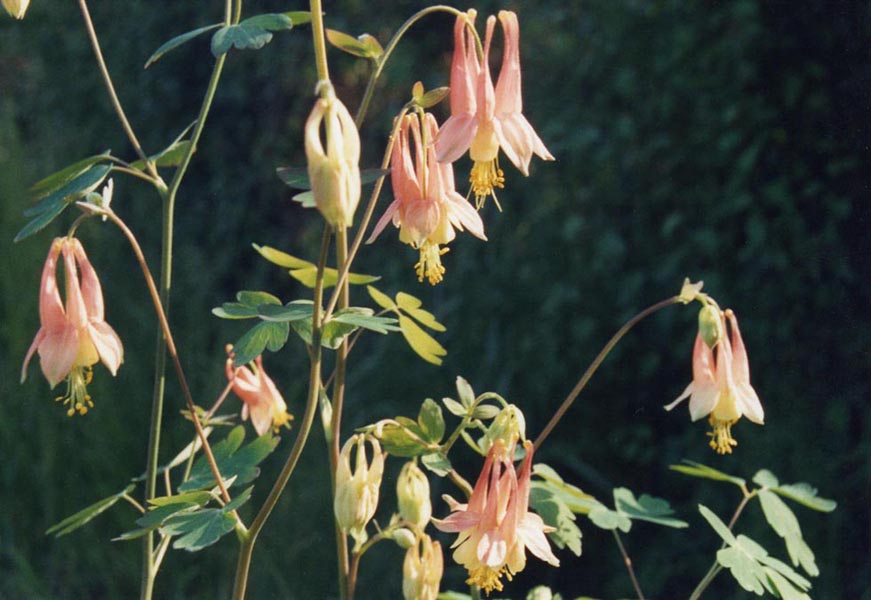
Canada's native wildflower flora spans from Atlantic coastal meadows to Pacific woodland edges, with a vast mid-continental prairie belt and boreal transition zones in between. The range of conditions means that "native wildflower gardening" looks quite different in Halifax than it does in Vancouver or Winnipeg. Choosing species appropriate to your specific ecoregion is the most reliable way to establish a planting that requires minimal ongoing intervention.
Understanding Canadian hardiness zones
Canada uses the Plant Hardiness Zone map published by Natural Resources Canada, which incorporates minimum winter temperature, snowfall depth, rainfall, and other climate factors. The zones run from 0a in the far north to 8b in mild coastal areas of southern British Columbia. Most Canadian gardens fall in zones 3 through 6.
Zone hardiness ratings for individual species give a minimum survival threshold, but they do not account for soil drainage, summer heat, humidity, or other factors that affect whether a plant will thrive over multiple seasons. A species rated to zone 3 may perform poorly in zone 5 conditions if the summer climate is too humid or the soil too heavy.
Region-by-region species overview
Atlantic Canada (Nova Scotia, New Brunswick, PEI, Newfoundland)
Atlantic gardens benefit from a range of moisture-tolerant native species. Wild blue flag iris (Iris versicolor) is a reliable choice for wet edges and rain gardens. Purple coneflower (Echinacea purpurea) performs well in well-drained spots with full sun. Bunchberry (Cornus canadensis) suits shaded woodland margins. Maritime conditions with high humidity and salt exposure near coasts favour rugose-leaved or waxy-coated species over those adapted to dry prairie conditions.
Quebec and Ontario
This region has the greatest diversity of native wildflower options for gardeners. The southern portions fall in zones 5–6b with warm summers and cold winters. Wild bergamot (Monarda fistulosa), black-eyed Susan (Rudbeckia hirta), and purple coneflower are widely available and well-adapted. Woodland edges suit wild columbine (Aquilegia canadensis), trout lily (Erythronium americanum), and Virginia bluebells (Mertensia virginica). Butterfly weed (Asclepias tuberosa) and prairie dropseed (Sporobolus heterolepis) work well in dry, open sites.
Prairie provinces (Manitoba, Saskatchewan, Alberta)
Continental climate conditions with cold winters, hot summers, and periodic drought define prairie gardening. Native prairie species are well-matched to these conditions: prairie crocus (Pulsatilla patens) blooms early in spring, followed by prairie smoke (Geum triflorum), blanketflower (Gaillardia aristata), and showy milkweed (Asclepias speciosa). Canada goldenrod (Solidago canadensis) provides late-season nectar. Most prairie species require excellent drainage and full sun; heavy clay soils need amendment or raised planting areas.
British Columbia
BC's climate ranges from temperate rainforest on the coast to semi-arid interior conditions in the Okanagan. Coastal gardens can support red flowering currant (Ribes sanguineum), camas (Camassia leichtlinii), and Douglas aster (Symphyotrichum subspicatum). Interior dry belt sites suit yarrow (Achillea millefolium), sticky purple geranium (Geranium viscosissimum), and penstemon species. The mild winters in the Lower Mainland extend the planting palette considerably.
Soil preparation basics
Most native wildflowers evolved in conditions that would seem inhospitable by conventional gardening standards: low fertility, varying drainage, and minimal organic amendment. Adding excessive compost or fertilizer to a wildflower planting tends to favour weedy competitors over the natives. The key preparation steps are:
- Weed reduction. Remove existing turf or weed cover by smothering (cardboard mulch for one growing season), solarization in summer, or repeated cultivation to exhaust the weed seed bank.
- Drainage assessment. Identify whether the site holds water after rain, drains rapidly, or sits in between. Match species to the drainage condition rather than amending to a single standard.
- Minimal fertility. Avoid adding fertilizer before seeding or planting. If soil is extremely compacted, light tilling to 10–15 cm is sufficient without adding organic material.
Seeding vs. transplanting
Native wildflowers can be established from seed or from nursery-grown plants. Both approaches have trade-offs.
Direct seeding is lower cost and allows for larger coverage, but requires more patience. Many native species need a cold stratification period — exposure to cold and moist conditions — before they will germinate. In Canada, fall seeding takes advantage of natural winter stratification. Spring seeding with pre-stratified or cold-moist treated seed is also effective.
Transplanting from nursery-grown plugs or containers gives a faster visual result and cleaner establishment, but is more expensive. It is the more reliable approach for small gardens where weed competition is difficult to manage during the slow establishment phase of direct seeding.
Timing note: For direct seeding in most Canadian zones, late October through November — after hard frost but before heavy snowfall — is a reliable seeding window. Seeds remain dormant through winter and germinate in spring.
Companion planting and structural layering
Native wildflower plantings work best when they include species that mature at different heights and bloom at different times. A three-layer approach gives year-round habitat value:
- Ground layer (under 30 cm): Wild ginger (Asarum canadense), pussytoes (Antennaria spp.), creeping phlox (Phlox stolonifera)
- Mid-layer (30–90 cm): Wild bergamot, black-eyed Susan, purple coneflower, wild columbine
- Structural layer (90 cm+): Canada goldenrod, Joe-Pye weed (Eutrochium purpureum), tall ironweed (Vernonia gigantea)
Including native grasses such as little bluestem (Schizachyrium scoparium) or prairie dropseed provides structural contrast and winter interest without outcompeting broadleaf wildflowers when planted at appropriate spacing.
First-year expectations
Native wildflower plantings commonly follow a pattern described in horticultural circles as "sleep, creep, leap" — minimal above-ground growth in year one while root systems establish, moderate visible growth in year two, and vigorous flowering from year three onward. Managing first-year expectations helps avoid the common mistake of removing a planting prematurely.
During establishment, hand-pulling or shallow cultivation to remove annual weeds is more effective than herbicide application, which can set back native seedlings.